Monday, October 18, 2010

SWAMI RAMDEV AND HINDU DISUNITY


SWAMI RAMDEV AND HINDU DISUNITY
When CPI leader Brinda Karad attacks Swami Ramdev, she is not attacking Ramdev in particular, she is attacking Hinduism in general. This guru or that guru, makes no difference to her, she is against all gurus. Other gurus might think that they are safe, that Ramdev committed some sin, for which he is paying. But one of them will be next in the line of fire! Hindu gurus are all vulnerable in today’s India: the Shankacharya has already been hit, so has Satya Sai Baba, with accusations of paedophilia, Amrita Anandamayi has to live under the constant shadow of an hostile Kerala communist-dominated government, Dhirendra Brahmachari has been obliterated and Sri Sri Ravi Shankar is periodically targeted as the ‘Guru of the rich’, the ‘glib Godman’ etc…
May I be forgiven my arrogance, but what Indian gurus have to understand is that for Indian communists, Hinduism is the N°1 enemy. Mao called religion ‘the opium of the people’. But for Indian communists, as for Britishers and Muslim invaders before them, what stands between their ambition for absolute power in India (and eventually a triumphant return of communism in the world – as Indian communists believe) is the hold that Hinduism has in the hearts of the rural people of India, who constitute 80% of this country. And still today, the humble farmer, from Uttar Pradesh to Tamil Nadu, has a natural understanding of the universality of God, who takes many names throughout the ages and can be Buddha, Jesus Christ, Ram or Mohamed and this humble farmer possesses the knowledge that there is something deeper than the skin and the mind, and a life beyond death. This knowledge is inbred, it is not in his head, not even in his heart, but in his or her genes transmitted from generation to generation.
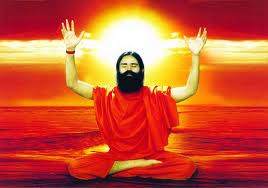
Of course, the English speaking media is too happy to oblige Brinda Karat and come down hard on gurus with all kind of accusations, ranging from superstition to conman ship. There is of course a strong communist streak in most Indian newspapers, whether it is Frontline’s and the Hindu’s open allegiance to Communist China, or Brinda Karat being the sister of Prannoy Roy’s wife (not many people know that). Before Ramdev, they condemned the Shankacharya, before him Osho, before him Dhirendra Brahmachari. You can even go back to Sri Aurobindo, who was accused in the early 1900′s by the moderate Congress-controlled press to be a ‘fanatic’, when he was only demanding total independence from the British, long before Gandhi took it up. Accusation against Hinduism of superstition, brainwashing, ritualistic ignorance, date back from British missionaries and have been taken up today by communists. Yet, Hinduism, at least the Hinduism which goes beyond the rituals and becomes universal spirituality, has nothing to do with superstition and conman ship: it is all about science, knowledge and light. Look at pranayama, a science that has known for thousands of years how to harness breath and use it for controlling the mind, for a better, more healthy, more spititualized life. If you read Osho’s books today, you find a lot of solid common sense and wisdom. Sai Baba cannot have millions of disciples from the most humble to the presidents of India, without ‘something’ which is beyond superstition. So it goes for Amrita Anandmai, Sri Sri Ravi Shankar, Ramdev, or Guruma of Ganeshpuri.
Aticle Source:-http://francoisgautier.wordpress.com/

Saturday, September 11, 2010

India Tourism Finds Strength in Rich Art Forms and Cultural Heritage


India is not perfect. But that does not deter a tourist to enjoy his or her vacations in the ancient land known for most interesting historical spectacles; spiritual heights; rich and varied culture; frequent use of vibrant colors in almost everything - from attires to elaborate dance costumes to paintings and frescoes; varied landscapes with climatic contrasts, rich wildlife and lush vegetation; and aromatic spices known for their flavor. Beauty is not a thing that exists in isolation. All regions and parts of India might not be very hygienic or organized but it is its imperfections that makes the country all the more endearing to all those who visit it with an open heart.

The co-existence of the wonderful and the abject presents you the true image of life - ornate Hindu Temples with mighty Shikhars, intricate carvings, huge candle holders, and deities that have much religious significance with not quite well-managed crowds might lead you to wait for hours to see the grandeur of the shrine until you have an expert guide with you who knows all the short-cuts to facilitate your pilgrimage trip. The luxurious royal forts and palaces on the outskirts of major cities, famous as tourist attractions, might have small vendors and poor artisans around selling most beautiful wares at very affordable prices and still living in dire poverty.

Foreign tourists affirm that real strengths of India lies its rich art forms and cultural heritage. The Ghoomer and Kalbeliya dance performances on the bonfire nights at Sam Sand Dunes with a backdrop of the Golden Fort of Jaisalmer during the Desert Safari Tour is tantalizing. The Camel Fair at Pushkar in Rajasthan, the Dussehra at Mysore Palace in Karnataka, and the Rath Yatra at the Jagannath Temple in Puri, Orissa are some of the fairs and festivals that attract international tourists with their unique oriental spectacles that are exclusive to the region where they are held.

Theme and region based tour packages allow international tourists to spend their holidays just as they want them to be. Palace On Wheels, Deccan Odyssey, Royal Orient, and Fairy Queen are luxury trains offering top-end tour packages that cover some of the most popular tourist attractions and sites. They also offer choicest luxuries and world-class services along the way to recreate the royal past of the regions they target. Golden Triangle tourist circuit in North India links major historical sites of Delhi, Agra, and Jaipur that are world-renowned and include Taj Mahal, Red Fort, and Hawa Mahal. The famous Khajuraho Temples represents maverick side of Hinduism while Kerala Backwaters is an ultimate Nature retreat, where you can enjoy houseboat cruises and relax in idyllic Ayurveda resorts.


Article Source: http://EzineArticles.com

Wednesday, September 1, 2010

Art of Living Hong Kong

Happy Janamastami…

Janamashtami celebrates the birth of Lord Krishna. Ashtami is significant as it indicates a perfect balance between the seen and the unseen aspects of reality; the visible material world and the invisible spiritual realm.

Krishna’s birth on Ashtami signifies his mastery of both the spiritual and material worlds. He is a great teacher and a spiritual inspiration as well as the consummate politician. On one hand, he is Yogeshwara (the Lord of Yogas — the state to which every yogi aspires) while on the other, he is a thief.

The unique quality of Krishna is that he is at once more pious than the saints and yet a thorough mischief-monger! His behaviour is a perfect balance of the extremes — perhaps this is why the personality of Krishna is so difficult to fathom. The avdhoot is oblivious to the world outside and a materialistic person, a politician or a king is oblivious to the spiritual world. But Krishna is both Dwarkadheesh and Yogeshwar.

Krishna’s teachings are most relevant to our times in the sense that they neither let you get lost in material pursuits nor make you completely withdrawn. They rekindle your life, from being a burnt-out and stressed personality to a more centred and dynamic one. Krishna teaches us devotion with skill. To celebrate Gokulashtami is to imbibe extremely opposite yet compatible qualities and manifest them in your own life.

Hence the most authentic way of celebrating Janamashtami is knowing that you have to play a dual role — of being a responsible citizen of the nation and at the same time to realise that you are above all events, the untouched Brahman. Imbibing a bit of avadhoot and a bit of activism in your life is the real significance of
celebrating Janamashtami.

source:http://artoflivinghk.wordpress.com

Saturday, August 28, 2010

Art of Living and You

Hi all. So what if I don't know to blog? I have come on the block. Oh! No, this is not me telling. You know I was pushed into blogging when I just became aware of the word. And the words above are the generous advice of that pusher. He is a friend of long standing. If I have to blame him, I have to blame for reasons that are countless. You know he is such an affable fella and a friendly devil kinda guy that you can't blame him even when you want to. Secretly I confessed to the fact that for many things I am today, he is the person that can take credit.

After all why should he do it to me or is he just kind to me alone? He is a couple of years older than I. he was a form ahead of me in school too. He, as I know was the most bubly and chirpy guy as a school boy. Oh! My...he was talking from anything to every thing though the topics naturally were limited to our age bound world. The games, dresses he had purchased from his pocket money and that blue skirt of our teacher. I did really enjoy the moments he used to narrate all these in his inimitable style, sometimes exaggerating sometiimes in an emotional voice. I don't remember disliking or objecting to anything except for that one day when he described the length of his teacher's legs. I was a bit frieghtened as I protested. He laughed at me first and then just switched over.

He was not like it as I knew. This thing bugged me all night long. I can't express what exactly I should call the thoghts that crawled my mind. But it is also true that appreciation for him surfaced strongly. But it never occured to me that he was growing up. Or was he grown up already?

More than anything else what brought me to adore him was his integrity. For some reason or the other I could not go to school or play without him. With him by my side, I felt safer always. He made fun off me, ragged me. But as always, his pranks showed me I had to grow more.

Now, in retrospect I think of him. He is coming back to our town after 32 years. They moved south after he finished high school. Later he called me to tell he had to give up further schooling for pursuing some job. He married a southerner taller than his own self. He built a home there and grew mango trees all around. This brings an incidence back to memory. In the mango season, while returning from school, we had to pass by a mangrove. And there was a hefty watchman gaurduing it. But my friend was all too clever for him. He used to yell and coo standing infront of the gate as if somebody else was trying to thieve mangoes and he wanted to alert the watchman. My friend was so quick to sense if the watchman wasn't around when he didn't turn up immediately. He would dash in, in big strides and whew.. would pluck a few mangoes. Always more for him and one or two for me. I didn't dare ask why.


Article Source: http://EzineArticles.com/

Friday, July 16, 2010

The Art Of Happy Living

What do you think about happiness? A philosophical approach to life; an intellectual activity or an academicals pursuit. No, not at all, nothing of the sort.
Happy living is nothing more than living a normal life free from undue pressures, problems and tensions. The Art of Happy Living is not a complicated kind of art difficult to learn rather a simple art of living well, eating well, thinking well and feeling well. Just tune up your mind to enjoy every moment of life and let the happiness follow you.
Happiness is purely an internal matter. It has nothing to do with your external circumstances. Most people do the fatal mistake of looking outwards for happiness rather than looking inwards. Only fools worry about the circumstances on which they have no control. Why worry if you cannot change the weather, rather enjoy it whether its hot, humid, cold, cloudy, foggy or snowy. Keep your internal weather pleasant all the time. Don't allow external matters to take your smiles away.
The feeling of happiness is within you. There is something positive within you which keeps you happy and there is something negative within you which keeps you unhappy. That "something" needs to be looked into thoroughly. If you want to live a happy life then get rid of the negative "something" which makes you unhappy. Negative approach always complicates the problems and increases unhappiness.
Happy living is the reward of positive thinking. Remember, only the positive thinking can bring happiness in your life. If you cannot think positively, you cannot live happily. Be your own coach and adviser. Look everything with a positive angle. Find something good even in most critical moments of your life. Make positive thinking the basis of your happy living.
Happiness is all around. It’s not far away from you. If you do not want to live happy, it’s up to you. It’s your own choice. Don't blame others. Don't blame your fate or external circumstances.
Article Source: http://EzineArticles.com/

Thursday, June 17, 2010

The Art of Living in joy and happiness

We are all livelihood in this planet. But do we all live in good health - or do we just continue living? Living well has little to do with objects things. Of course, we all require the basics of life, such as foodstuff and shelter -- and that's about it. fabric things can only build us "imagine" we live in good health, but, in fact, we may not be living in good health.
So, what is living in good health? Or, more exactly, what is the art of living in good health?
Living in good health is experience a sense of happiness, and embracing a emotion of appreciation and appreciation for that innate satisfaction. This appreciative mindset is akin to what is being felt by an artist who has just completed his work of art, and who is now looking at it with self-elation, and love what he see.
In real livelihood, where does that happiness come from?
The happiness comes from self-attitude. If you think about it, life is all about you -- what happens to you, and what you "imagine" what other people think about what happens to you. It is all on the topic of YOU! Accordingly, to live in good health, you must have helpful self-attitude or self-concept.
The art of living in good health is to focus on the journey rather than the objective. The objective is either unreachable, or comes to a dead-end -- in either case, life would become pointless and unfulfilled. The art of living in good health is to focus on others rather than on self. Focusing on others cherishes and nourishes mindfulness and loving kindness towards others, which make life having an important effect and worth living.